

Worried about how the 9th Biology paper will be set in 2026? You’re not alone. Every year, students lose marks not because they don’t study—but because they don’t study smart. The latest Pairing Scheme of 9th Biology 2026 Rawalpindi Board is your shortcut to focused preparation, helping you understand exactly which chapters matter most and how questions are distributed.
This article breaks the scheme down in simple words, shows you how to use it effectively, and gives practical tips to score higher without stress.
What Is the Pairing Scheme of 9th Biology 2026?
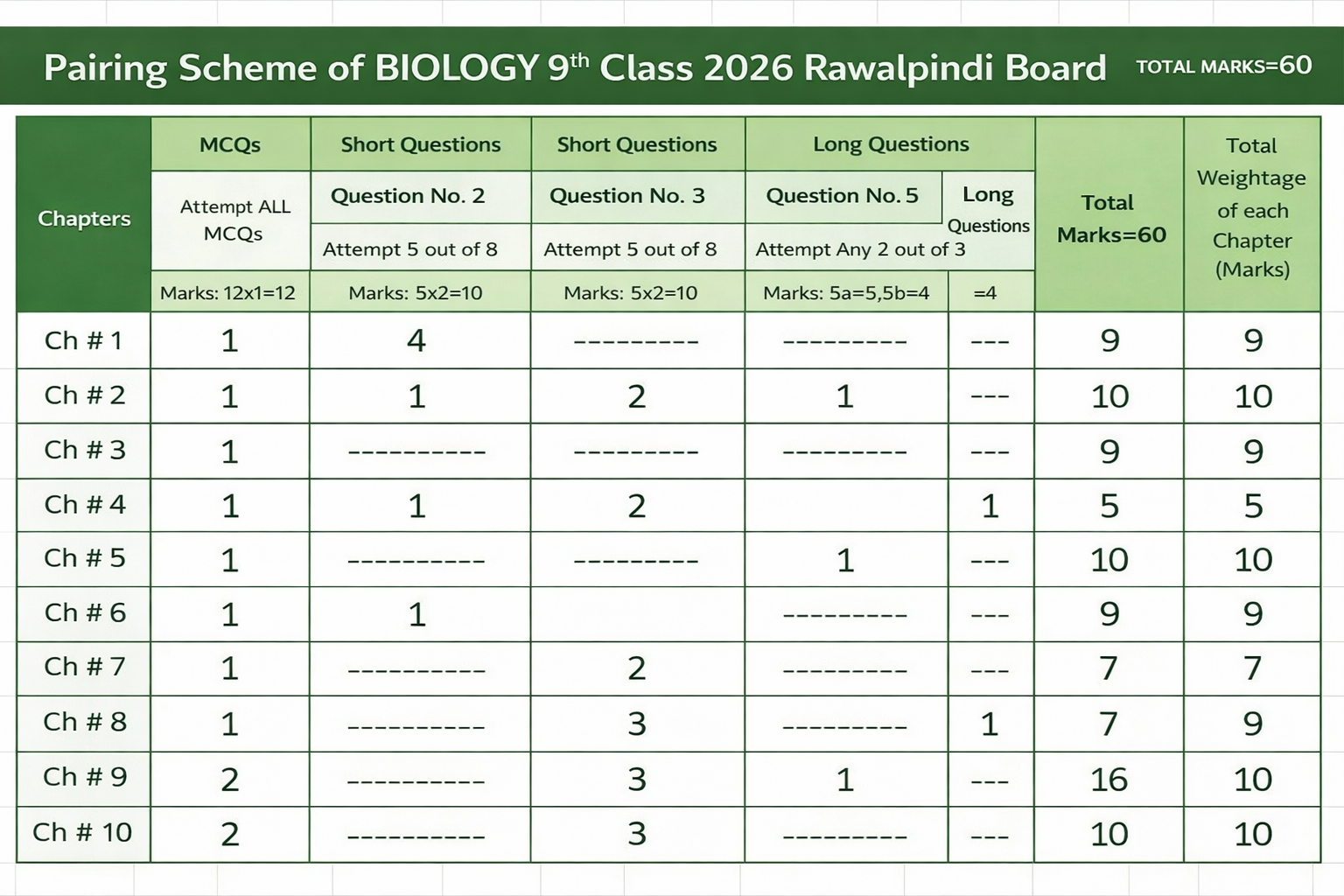
The pairing scheme is a paper pattern used by the Rawalpindi Board (BISE RWP) that shows how questions are selected from each chapter. It covers:
- MCQs distribution
- Short questions pairing
- Long questions selection
- Chapter-wise marks weightage
According to the latest 2026 pattern, the Biology paper carries 60 marks, structured to test both conceptual clarity and textbook understanding.
Paper Pattern at a Glance (Biology 9th Class)
Here’s how the Biology paper is usually divided:
- MCQs (12 marks): All compulsory
- Short Questions (30 marks):
- 3 sections
- Attempt 5 out of 8 in each section
- Long Questions (18 marks):
- Attempt any 2 out of 3
Each section pulls questions from specific paired chapters, which is why the pairing scheme is so important.
Chapter-Wise Weightage – Why It Matters
One of the biggest advantages of the 9th Biology pairing scheme 2026 is that it clearly shows which chapters carry more marks.
For example:
- Chapter 9 (Biodiversity) has higher weightage and often appears in long questions
- Chapters 1, 2, 3, 6, and 7 frequently contribute to MCQs and short questions
- Some chapters mainly appear in short questions only
👉 This means you shouldn’t study all chapters the same way. High-weight chapters deserve extra revision and practice.
How to Prepare Using the Pairing Scheme (Step-by-Step)
1. Prioritize High-Scoring Chapters
Start with chapters that appear in long questions. These can make or break your result.
2. Prepare Short Questions in Pairs
Short questions usually come from paired chapters, not randomly. Study those chapters together to save time and improve recall.
3. MCQs Need Full Coverage
MCQs can come from any chapter, so don’t skip small topics, definitions, or diagrams.
4. Use Diagrams and Keywords
Examiners love:
- Labeled diagrams
- Biological terms
- Clear headings in long questions
These small things can easily boost your marks.
Common Mistakes Students Make
- Studying without checking the pairing scheme
- Ignoring low-mark chapters completely
- Writing long answers without structure
- Memorizing instead of understanding concepts
Also Read About: Urdu 10th Class Paper Pairing Scheme 2026
Avoid these, and you’re already ahead of many students.
Expert Tip for Biology Toppers
✔ Revise definitions and differences daily
✔ Practice past papers with the pairing scheme in mind
✔ Write answers to the point—Biology rewards clarity, not length
Consistent revision + smart planning = guaranteed improvement.
Final Words
The Pairing Scheme of Biology 9th Class 2026 Rawalpindi Board is more than just a paper pattern—it’s a strategy tool. When used correctly, it reduces pressure, saves time, and helps you focus on what truly matters.
Instead of studying blindly, study strategically. Follow the pairing scheme, trust the process, and walk into the exam hall with confidence.