

The Regional Tax Office (RTO) Rawalpindi, widely recognized as the FBR Tax House, stands as one of the most vital administrative and financial landmarks in the twin cities. Situated directly adjacent to the newly transformed Marka-e-Haq Square (formerly Kutchery Chowk) and near the corner of Old Airport Road and Mayo Road, this institution plays a pivotal role in national revenue collection, corporate tax compliance, and public fiscal facilitation.
Following the historic completion of the Marka-e-Haq Square redevelopment project by the Frontier Works Organisation (FWO), commuting to and navigating around this institutional hub has undergone a remarkable transformation. This comprehensive guide explores the rich history, architectural layout, administrative hierarchy, daily operations, security protocols, and seamless transit connectivity of the FBR Tax House Rawalpindi.
1. Historical Background and Architectural Layout
Construction and Heritage
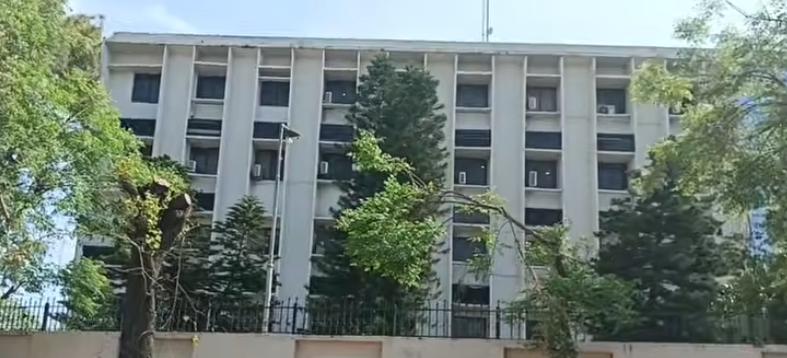
Built in 1964, the primary administrative building of the FBR Tax House has stood as a silent witness to decades of urban evolution in Rawalpindi. Originally constructed during an era of significant public sector expansion, the building has been meticulously maintained and retrofitted to accommodate modern administrative demands while preserving its mid-century institutional architecture. Positioned right alongside the flyovers of Marka-e-Haq Square, the upper floors of the office offer a commanding, panoramic view of the newly redesigned multi-tier interchange and the bustling traffic flow below.
Floor-by-Floor Architectural Blueprint
The multi-story complex is engineered to optimize departmental workflows, public facilitation, and internal record management:
- The Basement: Dedicated entirely to archival storage, historical documentation, tax files, and record retention. It acts as the institutional memory vault for regional tax files spanning decades.
- Ground Floor: The epicenter of daily public interaction and core administrative functions. This level houses the public facilitation counters, the Admin Branch, the Accounts Branch, the Server Room powering the digital tax infrastructure, and an on-site cafeteria catering to staff and visitors.
- First, Second, and Third Floors: Dedicated offices for Deputy Commissioners, Assistant Commissioners, auditing wings, corporate assessment units, and legal adjudication cells.
- Fourth Floor: Houses an on-site Mosque, providing a serene and accessible space for daily prayers for both employees and visiting taxpayers.
Surrounding Campus and Amenities
- Backside Facilities: The rear grounds feature dedicated car parking facilities for officers and staff, alongside residential staff quarters and officer houses located within the secure perimeter. Additionally, a specialized Law Bar is situated at the backside, serving as a professional hub where tax lawyers, advocates, and practitioners discuss tax cases, legal precedents, and procedural updates.
- Strategic Borders: The complex is uniquely bound by key civic geography. One side runs along Old Airport Road, while the adjacent boundary shares space with the DC Complex, cementing its position in Rawalpindi’s core administrative district.
2. Administrative Hierarchy and Staffing
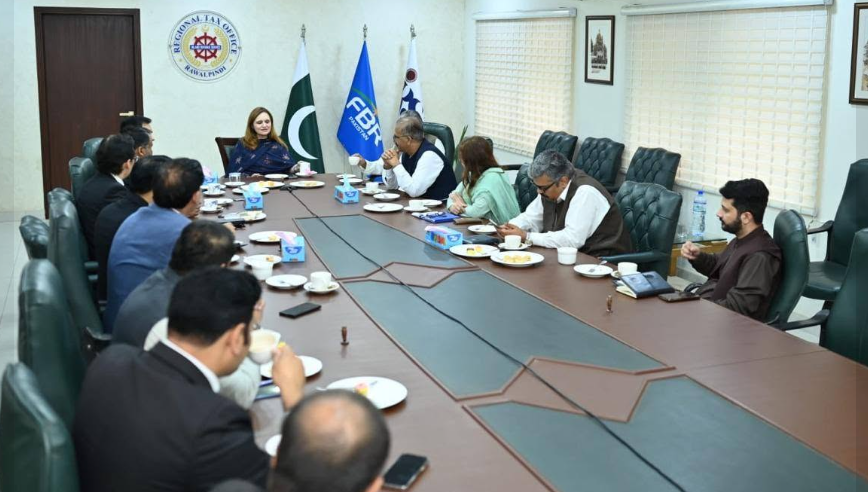
The FBR Tax House Rawalpindi operates as a massive bureaucratic and professional machinery, housing a diverse workforce ranging from entry-level clerical staff to high-ranking federal commissioners.
- Total Personnel: Approximately 200 to 250 staff members operate out of this main building daily.
- Grade Spectrum: Personnel span from Basic Pay Scale (BPS) 1 to BPS 21.
- Leadership and Executive Management:
- Chief Commissioner (BPS-21): Heads the regional office, providing overarching administrative direction and policy enforcement.
- Commissioners (BPS-20): Four senior commissioners oversee specialized functional zones (such as Inland Revenue Operations, Audit, Withholding, and Human Resources).
- Additional Commissioners (ADC), Deputy Commissioners (DC), and Assistant Commissioners (AC): Manage front-line assessment, legal disputes, recovery operations, and taxpayer grievances.
3. Security, Access Control, and Daily Footfall
Security Infrastructure and Protocols
Security at the FBR Tax House is managed with strict institutional protocols.
- Main Entrance: Situated on the flyover side, the primary security gate features a dedicated Security Guard Room.
- Personnel: Armed security is maintained through the deployment of professional Askari Company security guards, including notable personnel on duty such as Chacha Habib and Zahid, ensuring a secure perimeter around the complex.
- Public Access Protocol: Daily footfall averages between 200 to 220 visitors (including taxpayers, filers, and legal representatives). Entry is strictly regulated: visitors must present their original National Identity Card (NIC) at the security gate for log registration before being cleared to enter the main administration building.
Pedestrian Connectivity
For the convenience of employees and visitors crossing the busy corridor near the perimeter wall along the main road, an overhead pedestrian footbridge is installed directly adjacent to the Tax House boundary wall. This bridge allows staff and citizens to safely traverse the heavy traffic zones tied to the Civil Lines area.
4. Operational Timings and Schedules
To maintain efficient workflow and public dealing hours, the RTO Rawalpindi follows a standardized federal office schedule:
- Office Timings: 8:30 AM to 4:30 PM (Monday through Friday)
- Lunch and Prayer Break: 01:00 PM – 2:00 PM
- Weekend Closure:
- Saturday: Closed
- Sunday: Closed
5. Seamless Transit Connectivity via Marka-e-Haq Square
Historically, visiting the FBR Tax House through Kutchery Chowk was synonymous with navigating severe traffic bottlenecks, congestion, and gridlocks during peak morning and evening hours. However, the completion of the Marka-e-Haq Square redevelopment project has completely revolutionized access to this administrative hub.
Infrastructure Synergy
- Flyover and Underpass Routes: Commuters arriving from Rawat, GT Road, Murree Road, or Adiala Road can now utilize the signal-free flyovers and underpasses of Marka-e-Haq Square to reach Mayo Road and Civil Lines within minutes.
- Elimination of Congestion: The smooth flow around the interchange ensures that professionals, corporate representatives, and daily taxpayers face zero transit friction when heading toward the FBR building.
- Proximity Landmarks: Located at 12 Mayo Road, Civil Lines, Rawalpindi (directly opposite the Fatima Jinnah Women University and adjacent to the DC Complex), the Tax House is exceptionally well-positioned for multi-directional transit access.
6. Official Contact Information and Digital Profiles
For official correspondence, inquiries, or public facilitation, the Regional Tax Office Rawalpindi can be reached through the following verified contact channels and digital profiles:
- Official Address: Main Income Tax Building, 12 Mayo Road (near Marka-e-Haq Square and opposite Fatima Jinnah Women University), Civil Lines, Rawalpindi.
- Contact Number: (051) 9292767
- Official Digital and Social Media Profiles:
- YouTube Channel: YouTube
- Instagram Handle: Instagram Page
- Facebook Page: RTO Rawalpindi Official Facebook
- X (Twitter): Twitter Account
Conclusion
The FBR Tax House Rawalpindi is far more than just a government building; it is a foundational pillar of Pakistan’s economic governance framework. Standing proudly since 1964, its four floors, active basement archives, fourth-floor mosque, law bar, and dedicated administrative branches reflect decades of institutional service. Today, enhanced by the modern engineering marvel of Marka-e-Haq Square, accessing this vital tax hub is faster, safer, and more efficient than ever before—bridging the gap between modern urban infrastructure and public sector excellence in Rawalpindi.